All These Things Shall Give Thee Experience
Historical Background and Reflections on Doctrine and Covenants Section 122


What is this historical background for Doctrine and Covenants Section 122?
For the most part, the historical background for this section is the same as that of the preceding section. (see also here)
Nevertheless, in his book The Revelations of the Prophet Joseph Smith, Lyndon W. Cook sheds more light on this historical background for this section:
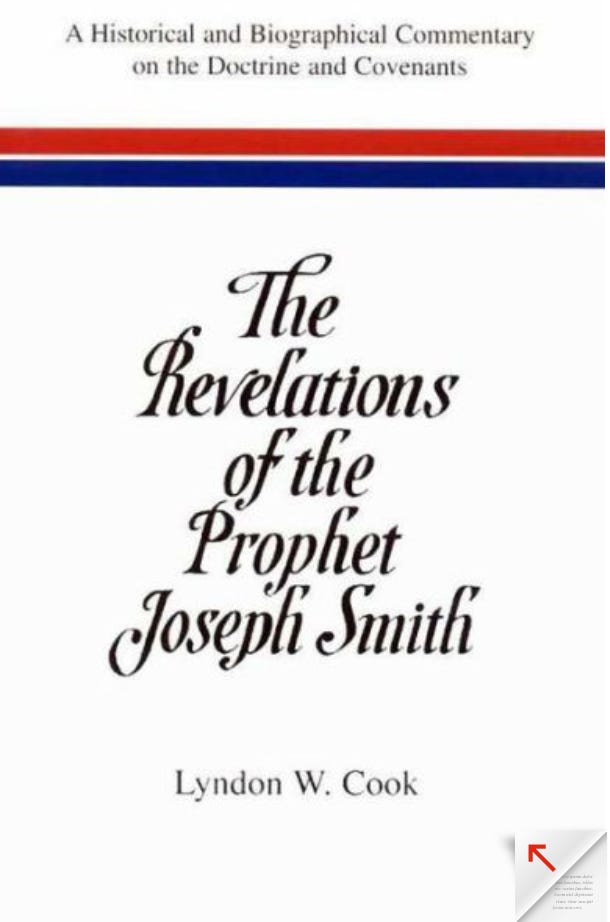
Date. March 1839 (20-25 March. See Historical Note for section 121.)
Place. Liberty, Clay County, Missouri (Liberty Jail).
Historical Note. See Historical Note for section 121. Verse 6 refers to the Prophet’s arrest and heart-rending departure from his family at Far West, Missouri in November 1838. Lyman Wight described the inhumane scene:
“About the house the prisoners were to have been shot on the public square in Far West, they were exhibited in a wagon in the town all of them having families there, but myself; and it would have broken the heart of any person possessing an ordinary share of humanity, to have seen the separation. The aged father and mother of Joseph Smith were not permitted to see his face, but to reach their hands through the curtains of the wagon, and thus take leave of him. When passing his own house, he was taken out of the wagon and permitted to go into the house, but not without a strong guard, and not permitted to speak with his family but in the presence of his guard and his eldest son, Joseph, about six or eight years old, hanging to the tail of his coat, crying father, is the mob going to kill you? The guard said to him, “you damned little brat, go back, you will see your father no more.”
Publication Note. Section 122 was first published in the Times and Seasons (July 1840) and was included as section 122 in the 1876 edition of the Doctrine and Covenants. (p. 240)

The authors of the online resource Joseph Smith’s Revelations: A Doctrine and Covenants Study Companion from the Joseph Smith Papers add the following details to the historical background for this section:
Letter to Edward Partridge and the Church, circa 22 March 1839
Source Note
JS, Hyrum Smith, Lyman Wight, Caleb Baldwin, and Alexander McRae, Letter, [Liberty, Clay Co., MO], to Edward Partridge and the church, Quincy, Adams Co., IL, [ca. 22 Mar. 1839]; handwriting of Alexander McRae, with insertion by JS; signatures of JS, Hyrum Smith, Lyman Wight, Caleb Baldwin, and Alexander McRae; nine pages; Revelations Collection, CHL. Includes address and dockets, with a redaction in graphite. For more information, see the source note on the Joseph Smith Papers website.
Historical Introduction
Doctrine and Covenants 122 and 123 comprise excerpts from JS’s circa 22 March 1839 letter, which is also excerpted in Doctrine and Covenants 121. See the introduction in Doctrine and Covenants 121.
This is Bruce R. McConkie’s section heading for this section:
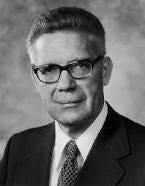
The word of the Lord to Joseph Smith the Prophet, while a prisoner in the jail at Liberty, Missouri. This section is an excerpt from an epistle to the Church written around March 22, 1839.
With this historical background information in mind, let’s examine and appreciate the revelation itself:
The ends of the earth shall inquire after thy name, and fools shall have thee in derision, and hell shall rage against thee;
While the pure in heart, and the wise, and the noble, and the virtuous, shall seek counsel, and authority, and blessings constantly from under thy hand.
And thy people shall never be turned against thee by the testimony of traitors.
And although their influence shall cast thee into trouble, and into bars and walls, thou shalt be had in honor; and but for a small moment and thy voice shall be more terrible in the midst of thine enemies than the fierce lion, because of thy righteousness; and thy God shall stand by thee forever and ever.
If thou art called to pass through tribulation; if thou art in perils among false brethren; if thou art in perils among robbers; if thou art in perils by land or by sea;
If thou art accused with all manner of false accusations; if thine enemies fall upon thee; if they tear thee from the society of thy father and mother and brethren and sisters; and if with a drawn sword thine enemies tear thee from the bosom of thy wife, and of thine offspring, and thine elder son, although but six years of age, shall cling to thy garments, and shall say, My father, my father, why can’t you stay with us? O, my father, what are the men going to do with you? and if then he shall be thrust from thee by the sword, and thou be dragged to prison, and thine enemies prowl around thee like wolves for the blood of the lamb;
And if thou shouldst be cast into the pit, or into the hands of murderers, and the sentence of death passed upon thee; if thou be cast into the deep; if the billowing surge conspire against thee; if fierce winds become thine enemy; if the heavens gather blackness, and all the elements combine to hedge up the way; and above all, if the very jaws of hell shall gape open the mouth wide after thee, know thou, my son, that all these things shall give thee experience, and shall be for thy good.
The Son of Man hath descended below them all. Art thou greater than he?
Therefore, hold on thy way, and the priesthood shall remain with thee; for their bounds are set, they cannot pass. Thy days are known, and thy years shall not be numbered less; therefore, fear not what man can do, for God shall be with you forever and ever. (D&C 122:1-9)

This part of the revelation from the letter picks up where the last part of the revelation in the previous section finished. The Lord prophecies that the ends of the earth will inquire after the name of Joseph Smith. This prophecy continues to be fulfilled even as I write. The Lord teaches the Prophet Joseph Smith that all his perils and travails will give him experience and be for his good. The Lord descended below them all.

Have we not seen how the ends of the earth have inquired after the name of the Prophet Joseph Smith? Remember Moroni’s prophecy:
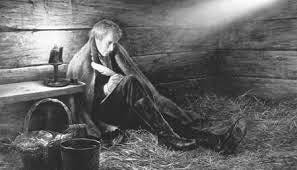
He called me by name, and said unto me that he was a messenger sent from the presence of God to me, and that his name was Moroni; that God had a work for me to do; and that my name should be had for good and evil among all nations, kindreds, and tongues, or that it should be both good and evil spoken of among all people. (Joseph Smith - History 1:33)
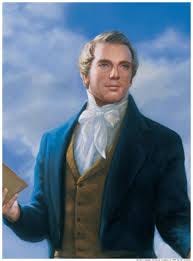
The Prophet Joseph Smith’s name has been had for good and evil among all nations, and both good and evil have been spoken of him among all people. The Lord expanded Moroni’s prophecy to specify who would speak well of the Prophet Joseph Smith and who would speak ill of him. Although the ends of the earth still inquire after his name, only the pure in heart, the wise, the noble, and the virtuous seek counsel, and authority, and blessings constantly from under his hand. These are those who speak well of the prophet Joseph Smith. Fools, on the other hand, deride the Prophet Joseph Smith, and all hell rages against him.
Although the Lord prohibits His children from calling each other fools, with His Divine perspective, power, and authority, the Lord rebukes foolishness whenever necessary:
The fool hath said in his heart, There is no God. Corrupt are they, and have done abominable iniquity: there is none that doeth good. (Psalm 53:1)
And he said unto them, Take heed, and beware of covetousness: for a man’s life consisteth not in the abundance of the things which he possesseth.
And he spake a parable unto them, saying, The ground of a certain rich man brought forth plentifully:
And he thought within himself, saying, What shall I do, because I have no room where to bestow my fruits?
And he said, This will I do: I will pull down my barns, and build greater; and there will I bestow all my fruits and my goods.
And I will say to my soul, Soul, thou hast much goods laid up for many years; take thine ease, eat, drink, and be merry.
But God said unto him, Thou fool, this night thy soul shall be required of thee: then whose shall those things be, which thou hast provided?
So is he that layeth up treasure for himself, and is not rich toward God. (Luke 12:15-21)
And because my words shall hiss forth—many of the Gentiles shall say: A Bible! A Bible! We have got a Bible, and there cannot be any more Bible.
But thus saith the Lord God: O fools, they shall have a Bible; and it shall proceed forth from the Jews, mine ancient covenant people. And what thank they the Jews for the Bible which they receive from them? Yea, what do the Gentiles mean? Do they remember the travails, and the labors, and the pains of the Jews, and their diligence unto me, in bringing forth salvation unto the Gentiles?
O ye Gentiles, have ye remembered the Jews, mine ancient covenant people? Nay; but ye have cursed them, and have hated them, and have not sought to recover them. But behold, I will return all these things upon your own heads; for I the Lord have not forgotten my people.
Thou fool, that shall say: A Bible, we have got a Bible, and we need no more Bible. Have ye obtained a Bible save it were by the Jews? (2 Nephi 29:3-6)
Then he said unto them, O fools, and slow of heart to believe all that the prophets have spoken:
Ought not Christ to have suffered these things, and to enter into his glory?
And beginning at Moses and all the prophets, he expounded unto them in all the scriptures the things concerning himself. (Luke 24:25-27)
And when I had said this, the Lord spake unto me, saying: Fools mock, but they shall mourn; and my grace is sufficient for the meek, that they shall take no advantage of your weakness;
And if men come unto me I will show unto them their weakness. I give unto men weakness that they may be humble; and my grace is sufficient for all men that humble themselves before me; for if they humble themselves before me, and have faith in me, then will I make weak things become strong unto them. (Ether 12:26-27)
Thus fools continue to have the Prophet Joseph Smith in derision, whereas the pure in heart, the wise, the noble, and the virtuous continue to seek counsel, and authority, and blessings constantly from under his hand. The Lord’s promise and prophecy, as well as Moroni’s prophecy, is being fulfilled even as I write.
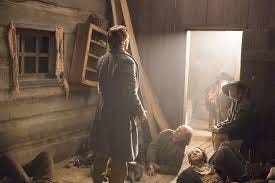
The Lord promised His servant Joseph that his troubles, including imprisonment, should last but a small moment, after which he would be honored and, because of his righteousness, his voice would be more terrible in the midst of his enemies than the fierce lion. God also promised to stand by His servant Joseph forever. In my estimation, the complete fulfillment of these prophecies is still in the future. If the Gentiles do not repent, a remnant of Jacob will more completely fulfill this prophecy:

Then shall ye, who are a remnant of the house of Jacob, go forth among them; and ye shall be in the midst of them who shall be many; and ye shall be among them as a lion among the beasts of the forest, and as a young lion among the flocks of sheep, who, if he goeth through both treadeth down and teareth in pieces, and none can deliver.
Thy hand shall be lifted up upon thine adversaries, and all thine enemies shall be cut off.
And I will gather my people together as a man gathereth his sheaves into the floor.
For I will make my people with whom the Father hath covenanted, yea, I will make thy horn iron, and I will make thy hoofs brass. And thou shalt beat in pieces many people; and I will consecrate their gain unto the Lord, and their substance unto the Lord of the whole earth. And behold, I am he who doeth it.
And it shall come to pass, saith the Father, that the sword of my justice shall hang over them at that day; and except they repent it shall fall upon them, saith the Father, yea, even upon all the nations of the Gentiles.
And it shall come to pass that I will establish my people, O house of Israel. (3 Nephi 20:16-21)
After these great prophecies, promises, and blessings, the Lord reassured and comforted His servant Joseph, teaching Him, in essence, that no matter what trials and tribulations he may experience, and no matter how terrible they might be, the Lord would be with him forever and help him through it all.
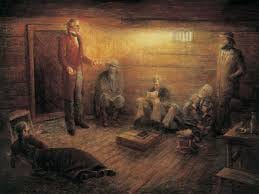
The Lord’s list of the tribulations and perils that the Prophet Joseph Smith might be called to endure was not arbitrary or accidental. In fact, Joseph Smith truly endured the very things that the Lord mentioned in these verses. That Joseph Smith was cast into the pit like Joseph in Egypt is already evident by this letter written from the pit.
The Lord’s description of the intense opposition that the Prophet Joseph Smith endured is beautiful and poetic. The Lord reassured Joseph that even if the very jaws of hell should gape open the mouth wide after him - along with everything else that he was called to endure - even these things should give him experience, and should be for his good. The Lord’s testimony and poignant rhetorical question makes each one of us pause and ponder: “The Son of Man hath descended below them all. Art thou greater than he?”

In this furnace of affliction, the Prophet Joseph Smith obtained the assurance from the Lord that the Priesthood should remain with him, and that he would live to fulfill his mission on the earth. The Lord’s counsel to the Prophet Joseph Smith applies to each one of us: Hold on thy way, and fear not what man can do.
1-9. The Lord continues speaking words of comfort to His servant through the Spirit of Revelation. He assures him that his name shall be known all over the world; that fools shall scoff and all hell rage, but that the pure, wise, and noble will embrace the truth (vv. 1-2). He assures him that traitors shall not be able to injure him except for a moment, but that his voice shall be like the roar of a lion among enemies (v. 4). He assures him that whatever happens to him shall be for his good (v. 8), and promises him divine assistance for ever and ever (vv. 5-7). And He reminds him that the Son of God suffered (v. 9). God never forsakes His servants in times of trouble.
Fools shall have thee in derision] Never was a truer word spoken. It is the fool who says in his heart that there is no God, and who holds “Mormonism” in derision. A man may have university education but, as a scoffer he is a fool, no matter how many doctor degrees he may have. It is also true that the wise, noble and virtuous embrace “Mormonism,” when they understand it. It appeals to them and to none else.
False brethren] There were many, but perhaps none exhibited more diabolical cunning than Samson Avard. This individual proposed to form a secret organization for the purposes of plunder and robbery, and succeeded in gathering a band of outlaws around him under the name of Danites. As soon as his plans and designs became known to the Church leaders, he was expelled from the Church, and then, to save himself, he swore that his band was a Church organization. His advice to Oliver Olney was “to swear hard against the heads of the Church.” “I intend to do it,” said he, “in order to escape, for if I do not, they will take my life” (Hist. of the Church, Vol. III., p. 209).
If thine enemies fall upon thee] The Prophet is contemplating the heartrending parting scene, when he and the brethren were torn from their loved ones, after having been betrayed into the hands of General Lucas. Before being hurried off to prison, they were allowed to see their families a moment. Joseph writes:
“I found my wife and children in tears, who feared we had been shot by those who had sworn to take our lives, and that they would see me no more. When I entered my house, they clung to my garments, their eyes streaming with tears, while mingled emotions of joy and sorrow were manifested in their countenances. I requested to have a private interview with them for a few minutes, but this privilege was denied me by the guard. I was then obliged to take my departure. *** My partner wept, my children clung to me, until they were thrust from me by the swords of the guards” (Hist. of the Church, Vol. III., p. 193).
Parley P. Pratt in his Autobiography, writes:
“I went to my house, being guarded by two or three soldiers. The cold rain was pouring down without, and on entering my little cottage, there lay my wife sick of fever, with which she had been for some time confined. At her breast was our son Nathan, an infant of three months, and by her side a little girl of five years. On the foot of the same bed lay a woman in travail, who had been driven from her house in the night, and had taken momentary shelter in my hut of ten feet square - my larger house having been torn down. I stepped to the bed; my wife burst into tears; I spoke a few words of comfort *** I then embraced and kissed the little babes and departed.”
Into the hands of murderers] The prisoners were technically in the hands of the civil authorities of the State, and were guarded by soldiers of the militia, but according to unimpeachable testimony, the guards at Richmond boasted to each other of their deeds of rapine, murder, and robbery, until the Prophet rebuked them in the name of Jesus Christ, and they quailed before him as the evil spirits before the Son of God. (pp. 761-762)
The earth inquiring after thy name and fools have thee in derision, and the people of Joseph Smith seeking counsel and authority from him (vv. 1-2), is basically the same prophecy as the Angel Moroni gave on September 22, 1823: “that my name should be had for good and evil among all nations, and tongues, or that it should be both good and evil spoken of among all people” (JS - H 1:33). Both prophecies have certainly come to pass. His voice more terrible than a fierce lion (v. 4) reminds us of his imprisonment in the Richmond, Missouri jail in November of 1838. Parley P. Pratt, who was imprisoned with him, wrote of this incident:
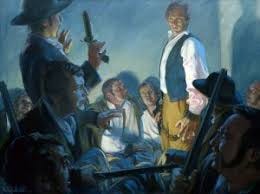
“In one of those tedious nights we had lain as if in sleep, till the hour of midnight has passed, and our ears and hearts had been pained, while we had listened for hours to the obscene jests, the horrid oaths, the dreadful blasphemies, and filthy language of our guards, Col. Price at their head, as they recounted to each other their deeds of rapine, murder, robbery, etc., which they had committed among the “Mormons,” while at Far West, and vicinity. They even boasted of defiling by force, wives, daughters, and virgins, and of shooting or dashing out the brains of men, women, and children.
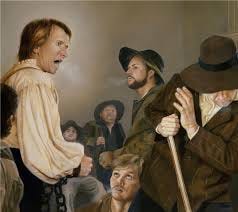
I had listened till I became so disgusted, shocked, horrified, and so filled with the spirit of indignant justice, that I could scarcely refrain from rising upon my feet and rebuking the guards, but had said nothing to Joseph, or any one else, although I lay next to him and knew he was awake. On a sudden he arose to his feet, and spoke in a voice of thunder, or as the roaring lion, uttering, as near as I can recollect, the following words:
“SILENCE—Ye fiends of the infernal pit. In the name of Jesus Christ I rebuke you, and command you to be still; I will not live another minute, and hear such language. Cease such talk, or you or I die THIS MINUTE.”
He ceased to speak. He stood erect in terrible majesty. Chained, and without a weapon,–calm, unruffled and dignified as an angel, he looked down upon the quailing guards, whose weapons were lowed or dropped to the ground; whose knees smote together, and who, shrinking into a corner, or crouching at his feet, begged his pardon, and remained quiet till a change of guards.
I have seen the ministers of justice, clothed in magisterial robes, and criminals arraigned before them, while life was suspended upon a breath, in the courts of England; I have witnessed a Congress in solemn session to give laws to nations; I have tried to conceive of kings, of royal courts, of thrones, and crowns; and of emperors assembled to decide the fate of kingdoms, but dignity and majesty have I seen but once, as it stood in chains at midnight, in a dungeon, in an obscure village of Missouri.”
The tribulations and perils given as possibilities in verses 5-8 were actual things that did happen to him in the following four years. The Lord revealing them as possible was probably to prepare him, but not to discourage him. His gaining of experience, and being benefited by these experiences, was the same principle given to the Romans by the Apostle Paul: “And we know that all things work together for good to them that love God, to them who are the called according to his purpose” (Romans 8:28). This principle had been stated in two previous revelations concerning other men, but with conditions of righteousness attached (see D&C 90:24; 100:15). The Lord knew that Joseph could handle them in righteousness. The question, comparing the Son of Man’s tribulations with Joseph’s (D&C 121:8), seems to be a way of strengthening Joseph to endure those events at the time they happened. Jehovah knows “the end from the beginning” (Abraham 2:8; Isaiah 46:10), and he assures Joseph that his life will be protected until his mission is completed (D&C 122:9). Joseph made several statements, after this assurance was given unto him, that he would not be taken until his mission was completed (see TPJS, 258, 274, 328). There were other assurances given to Joseph, but this one, under the circumstances he was in, was undoubtedly a major influence on his knowing his life was in the hands of the Lord.
Letter:
“We have reason to believe that many things were introduced among the Saints before God had signified the times; and notwithstanding the principles and plans may have been good, yet aspiring men, or in other words, men who had not the substance of godliness about them, perhaps undertook to handle edged tools. Children, you know, are fond of tools, while they are not yet able to use them.
Time and experience, however, are the only safe remedies against such evils. There are many teachers, but, perhaps, not many fathers. There are times coming when God will signify many things which are expedient for the well-being of the Saints; but the times have not yet come, but will come, as fast as there can be found place and reception for them.” [HC, 3:301-302; or TPJS, 144] (pp. 467-468)
Thus we see that all things work together for good to them that love God, and that all these things gave the Prophet Joseph Smith experience and were for his good. Elder Neal A. Maxwell’s book entitled All These Things Shall Give Thee Experience is also worth reading.

The authors of the LDS Come Follow Me curriculum offer these insights and questions for this section:
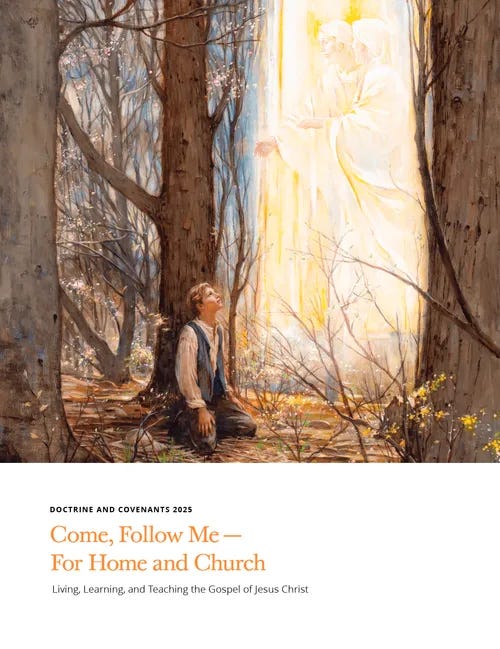
Jesus Christ has descended below all things so that He can lift me up.
What do you think it means to say that Jesus Christ “descended below … all [things]”? Here are some additional verses that might help you understand this phrase: Isaiah 53:3–4; Hebrews 2:17–18; 1 Nephi 11:16–33; Alma 7:11–13. Based on what you learn, consider restating Doctrine and Covenants 122:8 in your own words. How can you show your gratitude to Jesus Christ for descending below all things?
How does this insight from President Dallin H. Oaks affect your understanding? “We might even say that having descended beneath it all, [Jesus Christ] is perfectly positioned to lift us and give us the strength we need to endure our afflictions” (“Strengthened by the Atonement of Jesus Christ,” Ensign or Liahona, Nov. 2015, 64).